Creative work in olden days was slow. One would draw something, write a script three times, search footage, and piece clips together in the middle of the night. Coffee cups heaped up like miniature monuments of persistence. Then artificial intelligence-driven tools came in and literally turned the table. A ai video generator no limits will immediately break down the invisible fences that slackened the acceleration of imagination. Thought is visualized in minutes, even in seconds, and the distance between conception and its expression is reduced drastically.
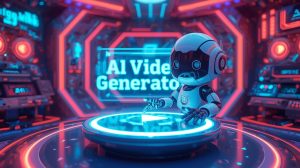
Such transition alters the emotional flow of creativity. People do not need to be concerned with equipment, lighting, actors, or editing software but only need to ask a system to turn an idea into a motion. A brief suggestion may trigger an animated discussion, a filmscape or a whimsical narrative. A small production crew can now be replaced by a single curious mind and a laptop.
This transformation is important because of the uncensored approach. Conservative generators tend to 360-degree censor matters, styles, or visual experimentation to an extent that creativity is a box. In comparison, an uncensored generator leaves the steering wheel to the creator. The artist dictates the course of action. The tool becomes a partner and not a controller.
The Freedom of Creativity is a Different Motion
Suppose you had a notebook of half-formed ideas that you were sitting with. One of them is the idea of a futuristic city being suspended on the ocean. The other one is dedicated to a playful explainer concerning working in the space garden. The third concept combines dark humor and surreal images- talking animals who are cooking things on Mars.
Decades ago such ideas may have been little more than margin notes. It would take budget, time and some sleepless weeks to produce them. Today, one just types down the idea, picks a style and leaves the system to convert imagination into video. It does not seem to be so much of a software editing process as it is of brainstorming with a very fast visual partner.
And there is an interesting thing that occurs in the course of that cooperation: when the video shapes new ideas emerge. The brain responds to the images, triggers a new idea, alters the angle, and the following one is created in a second. The process of creativity also turns into a discussion rather than a task.
Elimination of the Old Production Bottlenecks
The production of videos was like a journey to a distant location with constant flat tires. The scriptwriting, shooting, voice recording, editing, rendering. Each step slowed the next. Any little change would have a domino effect on the entire workflow.
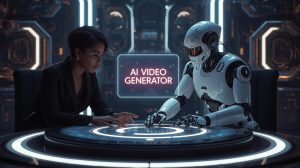
The map is altered with AI generation. An idea may be transferred directly to animation. Scenes in the background are done without scouting. Characters are wandering without actors. In seconds, voice narration is possible. The difference between rough and final output reduce so drastically that testing becomes feasible.
Consider the marketing departments with five campaigns in a week. Or teachers creating speedy visual aids to students. Or tiny creators who update on a daily basis. Conventional production would be ground down in that pressure. It is assimilated comfortably by AI generation.
A Playground of People who Tell Stories
Storytelling works by momentum. The story tends to fade away as soon as the creative spark dies during waiting time as the software works on making a video. That is maintained by an uncensored generator. Artists have the ability to experiment with ten visual directions of a single scene. One of them would be cinematic, another cartoonish, another surreal. They do not make early commitments as a way of exploration. The result of that liberty is unexpected genius. The only thing that may result in a more captivating scene than the initial thought is a random prompt tweak. The accidents become breakthroughs. Artists are familiar with this phenomenon. A few of the finest happenings come as a surprise.
Experiments With Visuals, Fear Eats the Soul
Censorship is fear inducing among artists. When a tool restricts the content or visual paths of ideas, creators start to self-edit before they can get the idea out of their head. Silent censorship smothers enquiring minds. An uncensored generator eliminates that mental burden. Artists do not fear experimentation. Desire to combine vintage film grain and neon metropolises of the future? Try it. Wondering how to make a philosophical quote a visual poem? Go ahead. Like absurd comedy about defiant vegetables? Why not. The strange notions usually bring somewhere interesting.
Speed Alters the Creative Rhythm
Speed is important than most individuals could imagine. In case the tools of creativity are sluggish, the brain will adapt by producing fewer ideas. It learns to conserve effort. However, the brain is back to being playful when the tools react instantly. Ideas multiply. One may try out some idea at breakfast, polish it at lunch, and release an edited video before dinner. That rhythm creates energy. Creators pursue inspiration rather than waiting to get it.
The Emergence of Solo Creators of Videos

A small team was needed at one time to produce a polished video. Camerawomen, editors, voice actors, scriptwriters. That was functional with the studios, but restricted the independent creators. AI generators evenly the playing field. Now that one individual is able to write the script, create graphics, narrate and complete the video within a single workflow. The output is more movie-like than digital software. The tool addresses technical sporadicity, and the creator is concerned with narration. Small producers are already in possession of the tools that can compete with major production firms. That transformation is already transforming content in the social media, education, and marketing campaigns.
Another Age of Visual Expression
The creative technology has always been in the same pattern. It seems to be difficult and daunting at first. Later it becomes intuitive. After sometime, it is pushed aside and artists concentrate on ideas. Generating AI videos is at that turning point. The technology is becoming increasingly powerful, but the interface becomes less complex month after month. Write an idea. Choose a style. Watch it come alive. To the creators, such a change is akin to a sketchbook returned. And as soon as artists understand that there are no definite lines within that sketchbook, another thing marvelous takes place: imagination escapes once more.